II. Anatomy: Muscles
- Anterolateral Neck
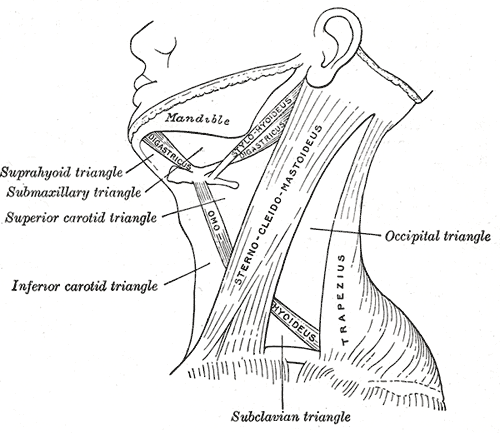
- Sternocleidomastoid Muscle (SCM)
- See Torticollis
- Allows for neck rotation, forward flexion and lateral bending
- Origin
- Sternum (medial SCM head)
- Medial clavicle (lateral SCM head)
- Insertion
- Lateral occiput and Temporal Bone (mastoid process posterior to ear)
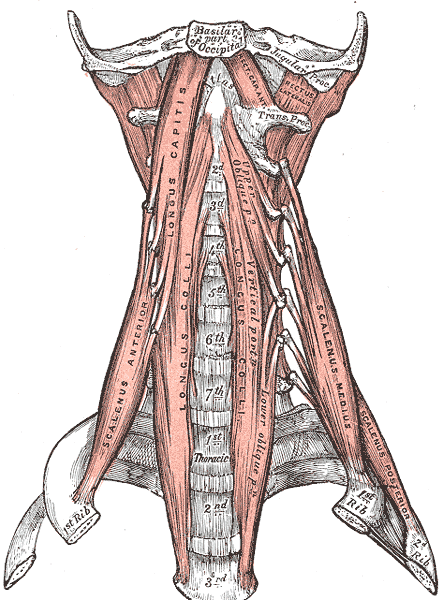
- Scalene Muscles (anterior, middle and posterior)
- Allows for upper rib (T1-2) elevation during deep inspiration, and neck flexion
- Anterior scalene
- Originates at C3-6 transverse processes (anterior tubercle)
- Inserts at first rib (scalene tubercle)
- Middle scalene
- Originates at C2-7 transverse processes (posterior tubercle)
- Inserts at first rib (superior aspect)
- Posterior scalene
- Originates at C5-7 transverse processes (posterior tubercle)
- Inserts at second rib (lateral aspect)
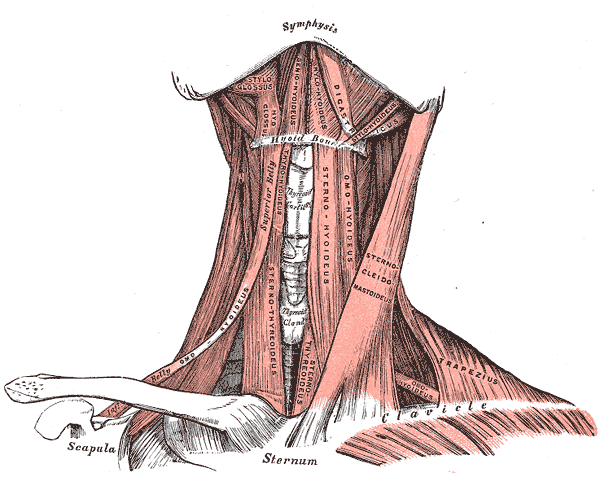
- Hyoid Muscles
- Two Muscle groups control the position of the Hyoid Bone and Larynx during speech and Swallowing
- Suprahyoid Muscles
- Infrahyoid Muscles
- Omohyoid Muscle
- Sternohyoid Muscle
- Thyrohyoid Muscle
- Sternothyroid Muscle (not directly attached to Hyoid Bone)
- Sternocleidomastoid Muscle (SCM)
- Posterior Neck
- Trapezius Muscle
- See Cervical Neck Strain
- Triangular Muscle of the upper thoracic back, allowing for neck extension and Shoulder shrug
- Origin
- Medial occiput
- Spinous processes (C7-T12)
- Insertion
- Clavicle (lateral third)
- Acomion
- Scapular spine
- Levator Scapulae
- Elevates the Scapula and Shoulder, and provides neck stabilization
- Originates at C1-4 Cervical Vertebrae (transverse processes)
- Insertion at the medial Scapula
- Suboccipital Muscles (Rectus capitis posterior, Obliquus capitis)
- Associated with cervicogenic Headache
- Group of four small Muscles allowing for fine Muscle movement (extension and rotation)
- Rectus capitis posterior major and minor
- Obliquus capitis superior and inferior
- Suboccipital Muscles originate in the region of C1 and C2
- Suboccipital Muscles insert at the occiput (for the most part)
- Trapezius Muscle
III. Anatomy: Other Specific Structures
IV. Anatomy: Images
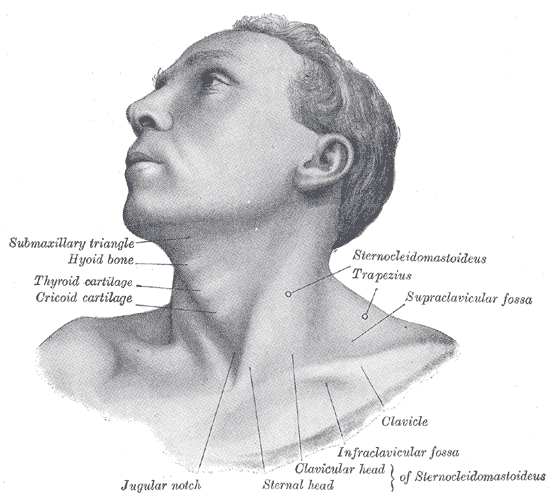
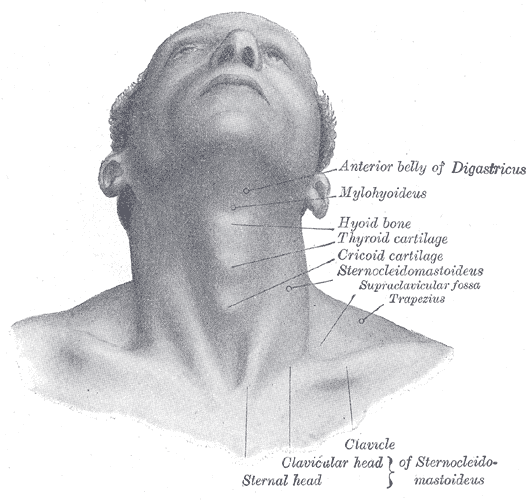
- Landmarks
 Lewis (1918) Gray's Anatomy 20th ed (in public domain at Yahoo or BartleBy)
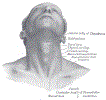 Lewis (1918) Gray's Anatomy 20th ed (in public domain at Yahoo or BartleBy)
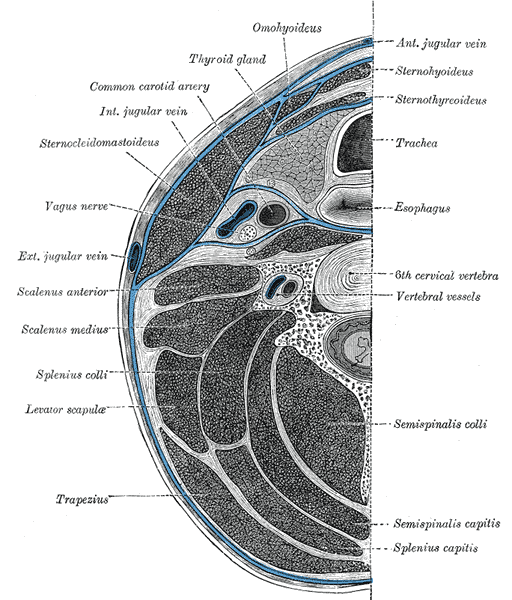
- Neck Cross Section
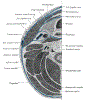 Lewis (1918) Gray's Anatomy 20th ed (in public domain at Yahoo or BartleBy)
-
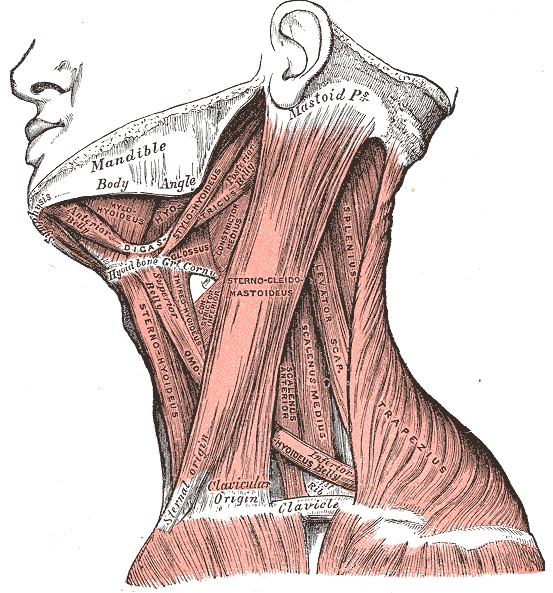
Muscles
 Lewis (1918) Gray's Anatomy 20th ed (in public domain at Yahoo or BartleBy)
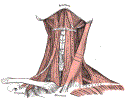 Lewis (1918) Gray's Anatomy 20th ed (in public domain at Yahoo or BartleBy)
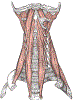 Lewis (1918) Gray's Anatomy 20th ed (in public domain at Yahoo or BartleBy)
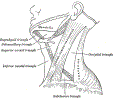 Lewis (1918) Gray's Anatomy 20th ed (in public domain at Yahoo or BartleBy)