
II. Physiology: Erythropoietin
- Primary Hormone regulator of RBC production
-
Erythropoietin sources
- Fetus: Monocyte and Macrophage system in liver
- Postnatal: Peritubular cells in Kidney
III. Physiology: Red Blood Cell
- Hemoglobin produced until amounts to 90% of RBC mass
-
Red Blood Cells start as Reticulocytes in Bone Marrow
- Reticulocytes are juvenile Red Blood Cells
- Nucleus extruded once RBC has matured
- Reticulocytes contain ribosome remnants
- Immature Reticulocytes contain most ribosomes
- Mature Reticulocytes contain least ribosomes
- Reticulocytes have 4 day life span
- Bone Marrow: 3 days (less if Erythropoietin high)
- Peripheral blood: 1 day
- Reticulocytes are juvenile Red Blood Cells
-
Red Blood Cell survival
- Normal RBC: 120 days
- Abnormal RBC: May survive as little as 15 days
- Following transfusion: RBC survival 2-3 weeks
IV. Physiology: Hemoglobin
- Images
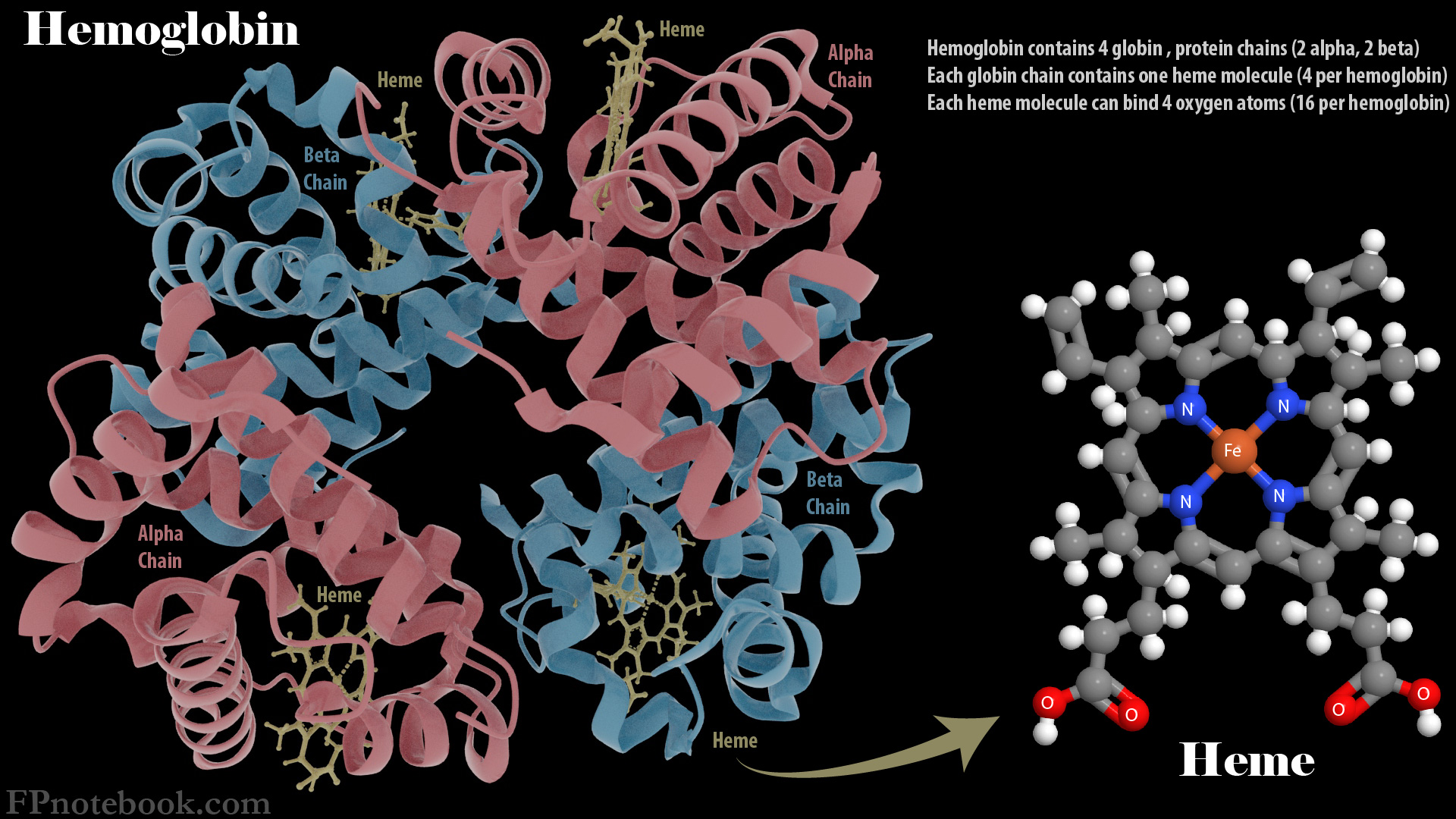
- Heme Protein complex
- Central iron-containing heme ring attached to
- Two pairs of polypeptides (4 total)
- A pair of alpha chains are found in every normal Hemoglobin type
- A pair of other polypetides depending on type (Gamma, Beta, Delta)
- Six types of normal Hemoglobin
- Embryonic
- Gower I
- Gower II
- Portland
- Fetal Hemoglobin (HbF): Alpha2-Gamma2
- Primary Hemoglobin in fetus
- Replaced by Adult Hemoglobin by age 6-12 months
- Adult Hemoglobin (HbA): Alpha2-Beta2
- Adult Hemoglobin (HbA2): Alpha2-Delta2
-
Thalassemia related Hemoglobins
- Hemoglobin Bart's: Gamma4
- Seen in Alpha Thalassemia
- Hemoglobin H: Beta4
- Seen in Beta Thalassemia
- Hemoglobin Bart's: Gamma4
V. References
VI. Resources
- MMWR Iron Deficiency Anemia Prevention